Semantics: what the engines understand, not what you write.
We read every page the way a generative engine does: entities, heading hierarchy, schema.org coverage and how much of your copy is in answer form. This is where the graph of meanings is born.
Semantic SEO analysis checks what your pages mean, not only which keywords they contain. GraphoRank reads every page the way an AI answer engine does, looking at entities, heading structure, schema.org markup and how much of your copy answers real questions, then groups your pages into the topic clusters they actually form. It is for content teams and SEOs who want to know if their pages are clear enough to be cited.
Read next:Generative engine optimization: the guide · AI SEO and AI visibility: the guide · Agentic navigability and citability
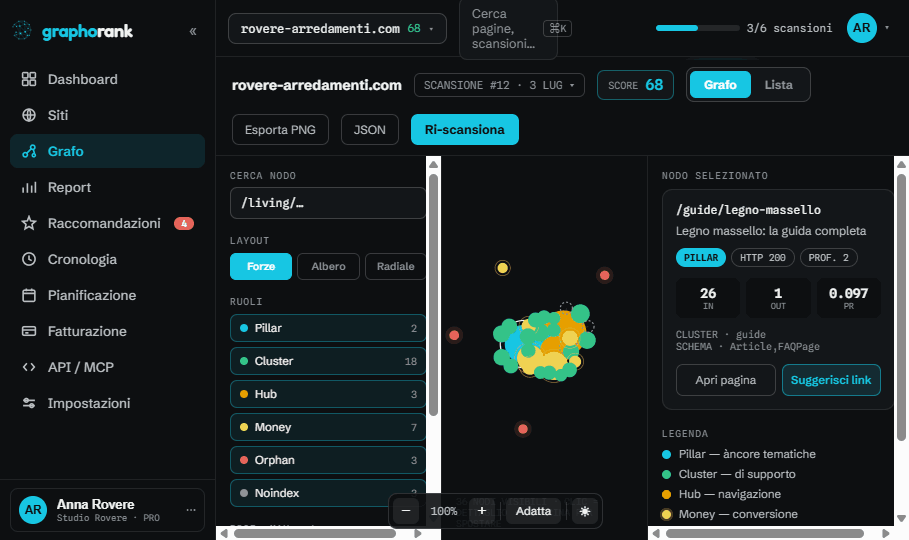
You can have a thousand articles and never get cited for a single question. Meaning is what counts, not volume — and meaning is measurable.
From text to meaning
Machine reading
We read each page as units of meaning — the way a generative engine ingests it, not the way it looks in a browser.
Topic clusters
Related meanings pull together: your site's real clusters emerge, often different from the ones you had planned.
Answerability
We measure how much of your copy answers real questions — the quality generative engines reward the most.
Questions about semantic analysis
It is a review of the meaning of your content: which topics a page covers, how clearly it says so, and how pages relate to each other. It goes beyond keyword counts.
Entities, the heading hierarchy, schema.org coverage and how answer-shaped the copy is.
A group of pages about related subjects. GraphoRank finds the clusters your content really forms, which can differ from the ones you planned.
It is how much of your copy answers real questions in a clear, short form. Generative engines tend to reward this quality.
Meaning is one of the four dimensions of the GraphRank score, with structure, AI visibility and technical health.